

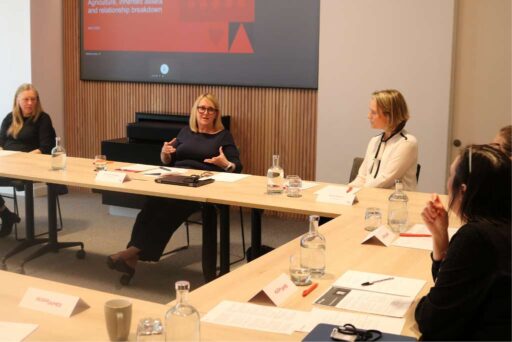
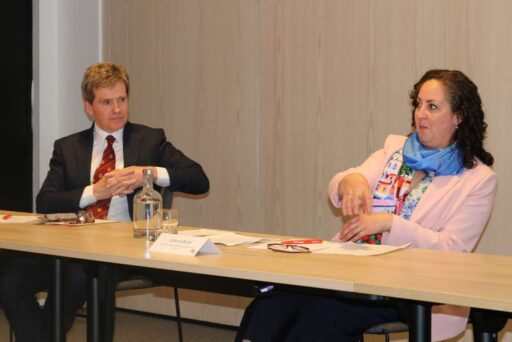
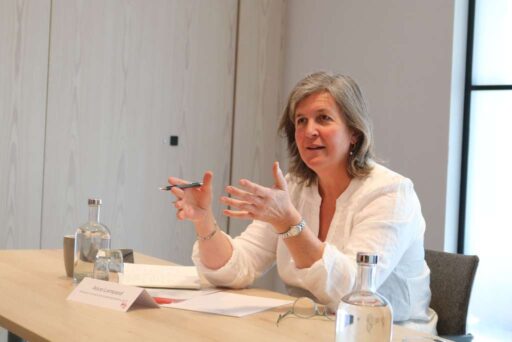
When relationships break down within farming families, the consequences reach far beyond the couple involved. At a Divorce Thought Leaders Roundtable, hosted at our headquarters in Cardiff, legal, financial, agricultural and wellbeing professionals came together to explore why collaboration, communication and early planning are critical to protecting both families and farming businesses.

Throughout the discussion, one thing was clear – for many farming families, the farm is far more than a business. It is home, identity, inheritance, routine, security, and legacy wrapped into one. Generations often live and work side by side, finances overlap, roles blur, and long-held assumptions replace formal agreements. That can work well for decades, until relationships begin to fracture.
Using the fictional “Morgan Dairy Farm” scenario as a backdrop for the discussion, contributors discussed the legal, emotional, and financial complexities that emerge when personal relationships and rural businesses become deeply intertwined.
What became clear around the table was that these disputes are rarely just about money or land. They are about fear, identity, communication and, often, a family’s anxiety about “being the generation that loses the farm”.
Farming separations can frequently involve “more difficulties perhaps than most” because family homes, business interests, and future inheritance are so closely connected.



Why farming separations are uniquely complex
In many agricultural businesses, formal structures simply do not keep pace with the reality of modern family life.
The Morgan Dairy Farm scenario reflected challenges many advisers around the table recognised immediately: no partnership agreement, blurred ownership arrangements, multi-generational involvement, diversification income streams, and longstanding verbal promises that had never been documented.
Susannah French, Agricultural Partner at Green & Co, described the absence of partnership agreements as one of the most common risks she encounters:
“Without that, there are no ground rules anywhere. It always feels fine in the good times. It’s when things become strained that you see everything start to unravel.”
That informality can create significant uncertainty during separation, particularly where one spouse has worked within the business for years without formal ownership, pension provision or financial transparency.
Samantha Roberts, Partner in our Private Wealth team, commented that the way many farming businesses develop over generations can create uncertainty around ownership:
“Over time, ownership structures can become unclear. Assets are often used interchangeably within the business and the family, making it difficult to establish precisely who owns what.”
That can leave families exposed not only during divorce proceedings, but also in relation to inheritance tax planning, succession disputes and future claims from wider family members.
John Davies, Senior Associate in our Private Wealth Disputes team added:
“Undocumented promises can create significant uncertainty for farming families and often sit at the heart of succession disputes. While there are legal remedies available when relationships break down, prevention is always better than cure. Clear communication, properly documented plans and regular succession reviews can help avoid costly and emotionally draining disputes in the future.”
The emotional realities behind the dispute
While legal and financial structures matter, contributors repeatedly returned to the emotional pressures that make farming separations particularly difficult.
Kate Miles, Charity Manager at the DPJ Foundation, spoke candidly about the psychological strain many farming families experience during relationship breakdown:
“Farmers identify as farmers. Their identity is intrinsically linked with their sense of self-worth.
“There’s often a real fear of being the generation that loses the farm.”
That pressure can intensify in multi-generational businesses where individuals fear being blamed for damaging the family legacy. Feelings of shame, anger and failure can make it harder for families to engage constructively with legal or financial advice. That is why contributors stressed the importance of creating safe, supportive spaces early on.
Kate emphasised the value of independent counselling and pastoral support alongside legal advice, particularly where there may be controlling behaviour, conflict or emotional imbalance within relationships.
Mediator and succession specialist Alice Lampard agreed, warning that unresolved emotions can easily derail negotiations:
“Feelings of frustration, fear, or shame can present as anger. An emotion many family members will not be comfortable exploring. Mediation holds a space to do that.
“Depending on the family and the context of their challenge, this often isn’t something you solve in a single day. There may be too many people, too many interests, and too much history involved.”
Why collaborative professional advice matters
One of the strongest themes emerging from the discussion was the importance of collaborative advice.
No single adviser can address every aspect of a farming separation in isolation. Legal, tax, valuation, succession, banking and wellbeing considerations overlap constantly.
Victoria Bond, Director of the CLA Cymru, said these conversations are becoming increasingly urgent as farming businesses face growing succession and inheritance tax pressures:
“This is so normal, it’s frightening, and often far more complicated than people realise.”
Nathan Sullivan, Chartered Wealth Manager at Coutts, pointed to the other common challenge of liquidity:
“The issue isn’t always the value on paper,” he said. “The problem is access to cash.”
Many farming businesses appear asset rich while remaining cash poor, making settlements, housing provision and ongoing maintenance particularly difficult to navigate.
Anna Owen, Independent Financial Adviser at Chase de Vere, stressed the importance of practical financial planning from the outset:
“It all starts with income, outgoings and cash. Before you can future-proof finances, you need to understand what somebody genuinely needs.”
Andrew Thomas, Director at Herbert R Thomas, also underlined the importance of independent expert advice during disputes.
“A single joint expert is hugely important. Our duty is to the court and the court alone.”
By working collaboratively, advisers can help families move away from entrenched positions and towards practical, workable solutions that preserve both relationships and business viability wherever possible.
As several contributors noted, the most effective outcomes often come when solicitors, accountants, valuers and financial advisers sit around the same table together.
Mediation, planning and protecting the future
The discussion also explored the growing role of mediation and non-court dispute resolution in farming cases.
While not appropriate in every situation, contributors agreed that early communication and structured conversations can often prevent disputes escalating further.
Alice Lampard encouraged families to involve younger generations in succession conversations much earlier:
“The families who talk regularly about these things manage change rather than react to it.”
The roundtable also highlighted increasing openness towards pre and postnuptial agreements within farming communities.
Abigail Jones, Associate in our Family team, said attitudes are slowly changing.
“People are becoming more protection savvy. Especially where succession and inherited assets are involved.”
Victoria Cannon agreed, noting that while nuptial agreements are not automatically binding, they can play an important role in protecting family businesses and clarifying expectations.
Importantly, contributors stressed that these conversations should not be viewed negatively. Done properly, they are about clarity, fairness and future planning, not anticipating failure.
Practical steps farming families can take now
- Review partnership agreements and ownership structures regularly
- Consider pre or postnuptial agreements where appropriate
- Start succession conversations earlier and involve younger generations
- Ensure wills and pension nominations are up to date
- Keep clear financial records and separate business and personal income where possible
- Seek early legal, financial and tax advice before problems escalate
- Encourage advisers to work collaboratively rather than in isolation
- Consider mediation and counselling support alongside legal processes
- Create space for open communication around expectations, responsibilities and future plans
Conclusion
The Morgan Dairy Farm scenario may have been fictional, but the challenges discussed around the table were very real.
What emerged most strongly from the conversation was that farming separations are rarely caused by one issue alone. More often, they expose longstanding gaps in planning, communication and structure that have existed quietly for years.
The good news is that many of these risks can be reduced.
With earlier conversations, clearer agreements and genuinely collaborative advice, farming families can place themselves in a far stronger position, not only to protect assets, but also relationships, wellbeing and long-term family stability.
As the discussion concluded, one message resonated clearly throughout the room: planning ahead is not about expecting failure. It is about protecting the people, businesses and legacies that matter most.