

When a marriage ends, it rarely ends cleanly, and for business owners, the personal and professional fallout are inextricably linked. A divorce can unsettle not just a relationship, but a company, a livelihood, and the future of everyone who depends on it.
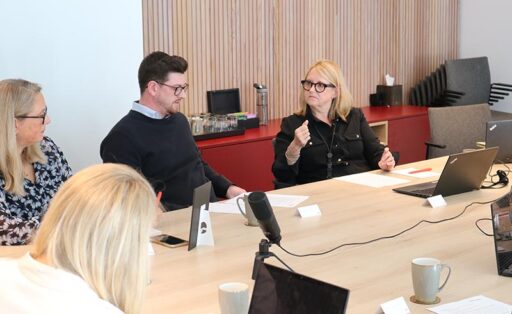
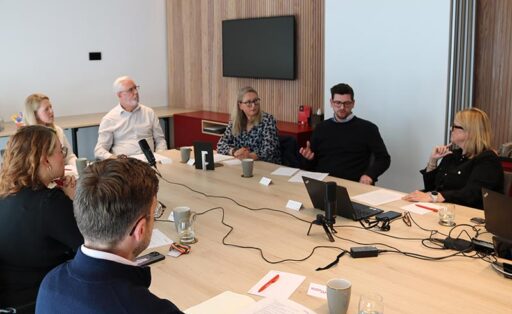
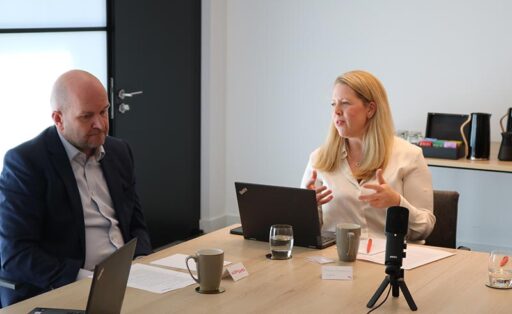
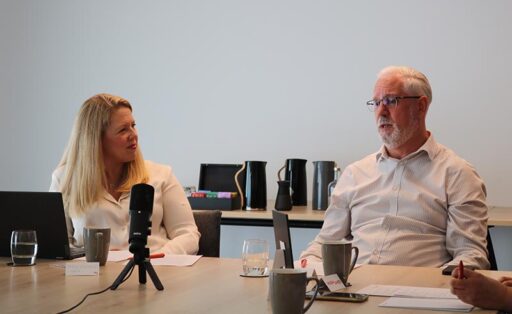
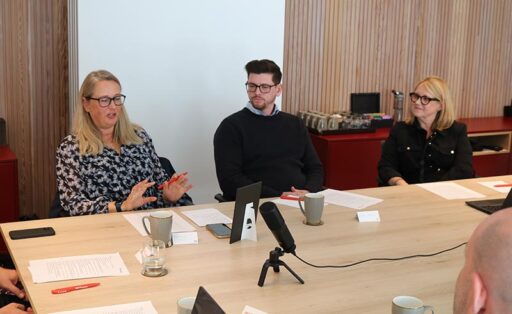
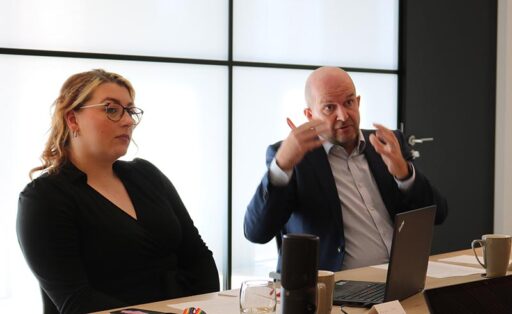
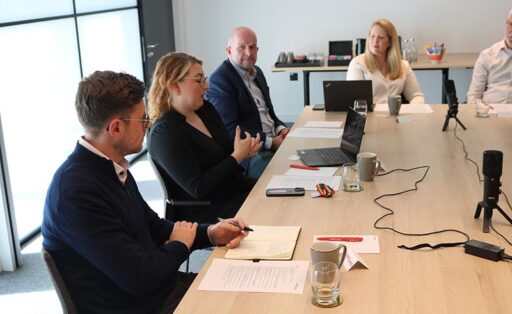
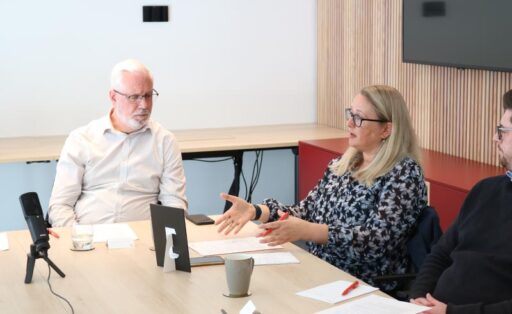
These realities were at the heart of our inaugural Divorce Thought Leaders Roundtable, hosted at our headquarters in Cardiff. The roundtable brought together leading specialists in family law, dispute resolution, accountancy, financial planning, tax, and coaching to discuss one of the toughest challenges in professional life: how to navigate divorce when a business is at stake.
Chaired by Victoria Cannon, Partner and Head of Family Law, the roundtable explored the human, financial, and corporate complexities that arise when directors or entrepreneurs separate. A recurring theme throughout the discussion was the value of early, joined up advice and cross-disciplinary collaboration to protect both personal wellbeing and business continuity, and in turn securing more sustainable outcomes for clients.
This holistic approach aligns with the launch of Family Law Plus, a dedicated online hub for our Family Law clients which launched in December 2025. Developed by our family law team in response to client feedback, Family Law Plus was designed to complement legal advice by providing our clients with clear information, practical guidance and wellbeing support that clients often need during separation and divorce.
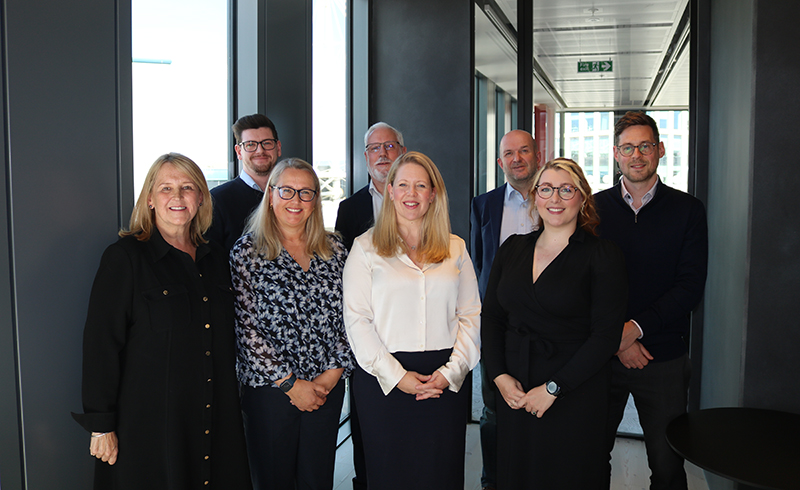
Joining Victoria Cannon at the round table were: Tracey Singlehurst-Ward, Partner in our Dispute Resolution team, Scott Harris, Partner at Green and Co Accountants, Stuart Evans, Tax Partner at Kilsby Williams, Daniel Gornall, Independent Financial Adviser at Centurion Chartered Financial Planners, Tim English, Business Coach at Inspiring Business Growth, Rhiannon Ford, Divorce Consultant and Coach and Abigail Jones, Associate Solicitor in our Family Team.
The double life of a divorce business-owner
“Business-owner divorces can be challenging when parties are acrimonious,” said Tracey Singlehurst-Ward, Partner in our Dispute Resolution team. “In some cases, disputes start to run within the business in parallel with matrimonial disputes, and it can leave parties dealing with two layers of actual or potential litigation, family and company law, simultaneously.”
Tracey described how tension between personal and business objectives can arise, putting the most well-intentioned directors under pressure.
“It’s very easy for things to become about principle: ‘It’s my company. I built it. I’m not giving it up.’ But our job is to support our clients by understanding the present and future goals and help develop strategies working between multi-disciplinary teams to best achieve those. We help clients pick their battles, choose the right forum, and focus on outcomes that preserve the business instead of destroying it. Our role is to make sure emotion doesn’t lead to decisions that drain value”
When business becomes a battleground
In the case example discussed by the group, one spouse had been ousted from the business amid allegations of controlling behaviour. The other, who remained in day-to-day control, was accused of withholding dividends and making unauthorised withdrawals.
For Scott Harris, Partner at Green and Co Accountants, the scenario was all too familiar.
“When one partner controls the accounts and the other’s been shut out, mistrust spreads like wildfire,” he explained. “We see people act impulsively, they stop payments, move money, or spend from the business as if it’s theirs alone. But those actions can backfire spectacularly. Withdrawing £200,000 from a company, for example, can create a Corporation Tax liability of over a third. Suddenly you’re in even deeper trouble.”
Scott’s advice was pragmatic: “The first step is always transparency. Interim accounts, independent valuations, clear financial reporting, you can’t negotiate without a shared picture of the truth. Once both sides trust the numbers, the temperature in the room drops.”
Stuart Evans, Tax Partner at Kilsby Williams, agreed that early financial discipline is essential.
“From a tax perspective, chaos costs money. The longer people act on emotion, the greater the clean-up. Even apparently small transfers between personal and company accounts can create liabilities that ripple through PAYE, VAT and Corporation Tax. When a marital dispute spills into the business, every transaction has to be justified and auditable.”
He added that involving accountants and tax advisers early can save time and avoid unintended consequences.
“If we can step in before lines are crossed, we can usually structure things in a way that preserves value. Once money’s been moved or spent, it’s about damage control and that’s always more expensive.”
Money, power and economic control
Financial transparency isn’t just a technical issue; it’s often a form of power. Daniel Gornall, Independent Financial Adviser at Centurion Chartered Financial Planners, pointed out that economic abuse is increasingly recognised within divorce proceedings.
“When one spouse controls the business and the finances, it can create a serious imbalance of power. In some cases, that amounts to economic abuse – a form of coercive control that’s increasingly recognised in family law. I help clients visualise their future using cash-flow modelling. Once you can see what life looks like after divorce such as where your income comes from, what your expenses will be, you move from panic to planning. Data gives people peace of mind.”


The human capital behind every case
But data alone isn’t enough. The emotional disorientation of divorce can derail even the most rational of clients. Tim English, Business Coach at Inspiring Business Growth, works with entrepreneurs and business owners, especially those in crisis, helping them separate personal hurt from professional decision-making.
“People make crazy choices when they’re in emotional pain,” Tim said. “They want to ‘win’, to prove a point. My role is to help them take the emotion out of it and focus on what comes next, for them, their children, and their business. I call it the learning tax. Every mistake, every hard experience, teaches you something you can use to build again.”
Rhiannon Ford, Divorce Consultant and Coach, agreed that emotional readiness directly affects the quality of legal outcomes.
“My background is in family law, and I saw time and again that clients couldn’t absorb advice because they were too upset,” she explained. “I now help them process what’s happening so that when they do meet their lawyer, they’re calm, informed, and able to make decisions.”
This collaborative relationship between legal and emotional support, said Abigail Jones, Associate Solicitor in our Family Team, has transformed the client experience.
“When a divorce coach is involved, I can give better advice. Clients understand what’s being asked of them, their instructions are clearer, and the overall cost is lower. It’s a more humane and more efficient process.”
Pensions, negligence and the hidden risks
As the discussion turned to long-term planning, Daniel Gornall raised a warning about pensions, often one of the largest but least understood assets in a divorce.
“If a pension is worth more than £100,000 or there’s a significant age difference, you need a Pension on Divorce Expert report,” he said. “People assume you just divide pensions equally, but if one’s a defined benefit scheme and the other’s not, or there’s a ten-year age gap, that won’t deliver fairness. Pension advice needs to feed into a broader financial plan that shows clients what those numbers actually mean for their future.”
Victoria Cannon added that overlooking pensions is one of the leading causes of professional negligence claims against family lawyers.
“Even apparently simple schemes can hide complex guarantees or lifetime benefits. That is why careful checks matter. Missing them can have serious consequences for clients and for the professionals advising them.”
Tracey Singlehurst-Ward confirmed the rise in pension-related litigation:
“We’ve acted in multimillion pound professional negligence cases where firms didn’t get or give proper pension advice. It’s a growth area for claims. Lawyers can’t go it alone we have to work hand-in-hand with financial advisers and actuaries.”
Prenups, postnups and prevention
One practical takeaway from the roundtable was that prevention is cheaper than cure.
“We’re doing far more post-nuptial agreements now,” said Victoria Cannon. “They’re especially valuable for business owners who want to ring-fence their shares or assets. Spending £5,000 on a post-nup could save £40,000 in legal fees later.”
She added that these agreements are becoming more culturally accepted.
“They’re not about mistrust, they’re about clarity. They help couples talk openly about money and protect what they’ve built.”
Abigail Jones noted that societal change is also driving demand.
“Second and third marriages, blended families, inherited wealth, people are pragmatic now. They’ve worked hard, and they want to ensure their children or business partners aren’t dragged into future disputes.”
Timing and teamwork: The collaborative model
A recurring theme was timing, knowing when each expert should join the process. Scott Harris said accountants and tax advisers add most value once reliable financial data is available.
“Early on, everything’s a smokescreen. But once the numbers are real, that’s when we can test scenarios, quantify risks, and create structure.”
Daniel Gornall added: “It’s not about empire-building; it’s about sequencing. The right professional at the right time delivers the best outcome.”
For Victoria Cannon, coordination is the key to resolving complex financial separations: “Our clients aren’t just divorcing spouses,” she said. “They’re directors, shareholders, employers. We owe it to them to build Team Client – a collaborative group of professionals who work together, not in silos, to secure both their personal and business futures.”
Lessons from the front line
By the end of the discussion, one truth stood out: divorce for business owners is as much a corporate event as it is a personal one. Handled poorly, it can dismantle years of growth. Handled collaboratively, it can safeguard wealth, preserve stability, and even lay the groundwork for a more resilient future.
“Before you pull the trigger, get advice,” urged Scott Harris. “Once you understand the tax and financial consequences, you’ll make calmer, better-informed decisions.”
Tim English agreed, encouraging clients to reframe the experience. “Surround yourself with specialists, plan strategically, and use it as an opportunity to rebuild.”
The last word: Collaboration as the future of family-business law
As the session closed, Victoria Cannon reflected on the broader mission of Family Law Plus, our multidisciplinary initiative designed to bring business sense into family breakdown.
“These clients sit at the intersection of family and corporate law. They can’t be helped by a single professional in isolation. When lawyers, accountants, planners and coaches work together from day one, we don’t just divide assets, we preserve businesses, protect livelihoods and help people move forward with confidence.”
For business owners, the takeaway was clear: The most valuable partnership after divorce isn’t necessarily the one that ended, it’s the new one you form with a team of experts working in harmony to protect your future.